PCB ASSEMBLY
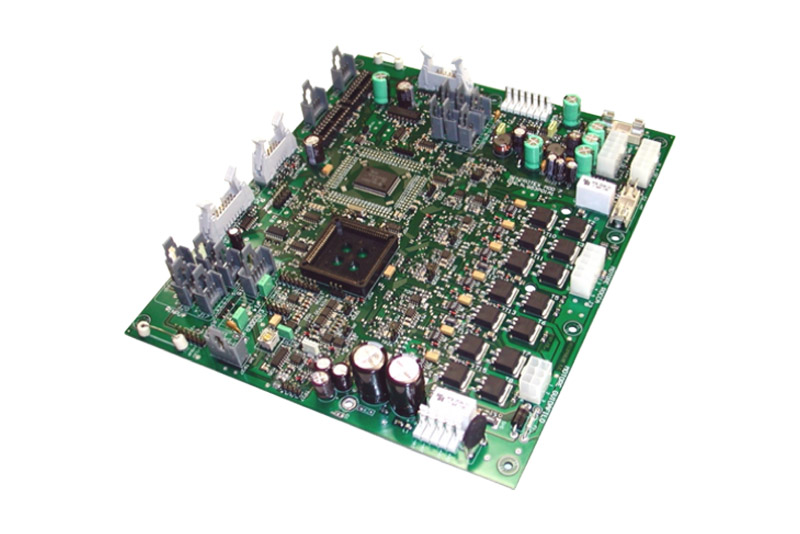
AUREL is the ideal partner for the production of assembled printed circuit boards (PCBA), offering a comprehensive service ranging from component purchasing and storage, to co-design of electronic projects, to customized test jigs and dedicated packaging.
Thanks to our decades of experience, we guarantee precise and reliable solutions within the customer’s required timeframes.
SMT ASSEMBLY LINES
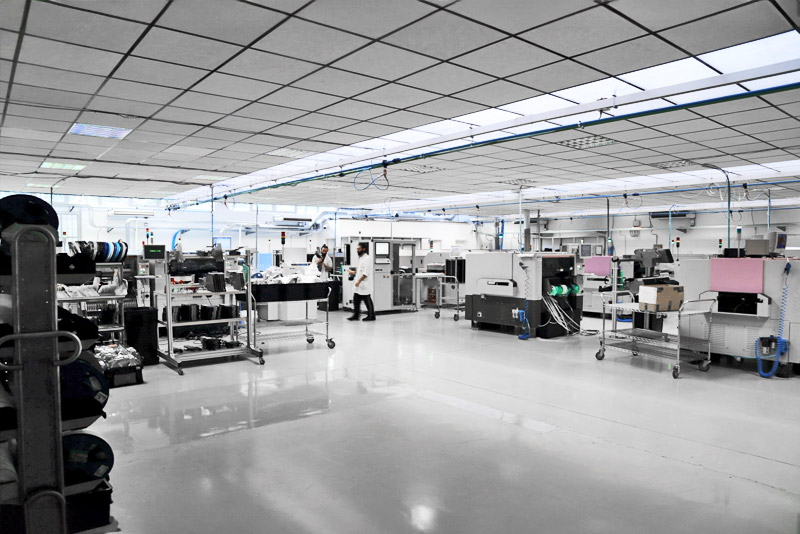
Three automatic assembly lines composed of:
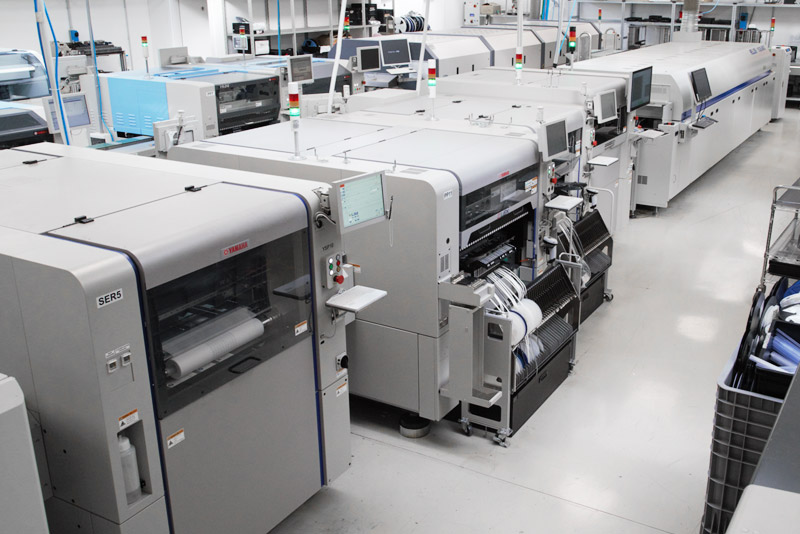
Screen printers
- N. 2 YSP Yamaha
- MCP Assembleon
- C890 Semiautomatic AUREL Automation
Pick and Place
- MG-1R Assembleon
- N. 3 Topaz-X II Assembleon
- Topaz-x Philips
- MG-2 Assembleon
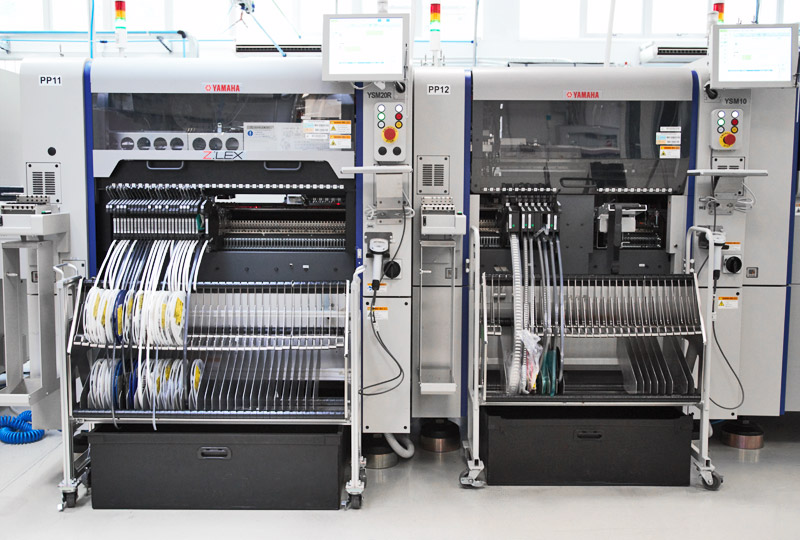
- N. 2 YS24 Yamaha
- N. 2 YS12F Yamaha
- YS20 Yamaha
- YSM20 Yamaha
Ovens
- Vapour Phase IBL
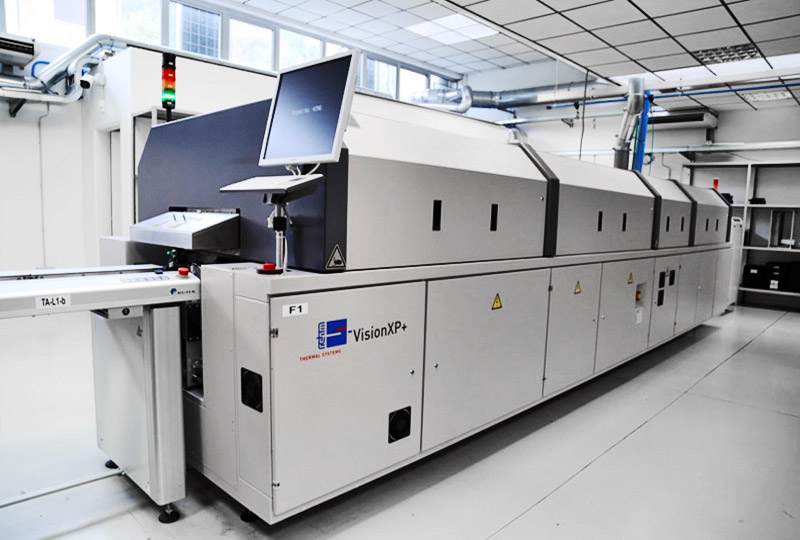
- Vision XP+ Vacuum 10 zones Rhem
- VXC basic 3150 9 zones Rhem
CONVECTION OVEN WITH 9 ZONES
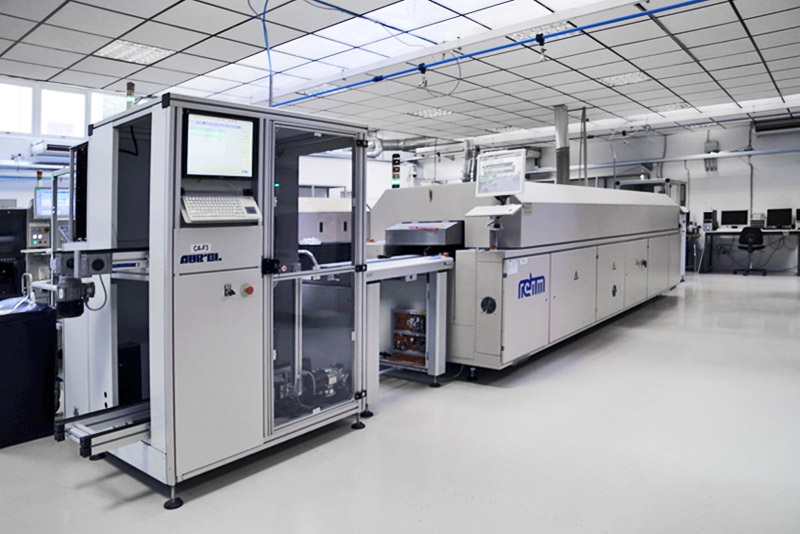
Many reflow problems are due to a process operating at the limit of specifications. The higher process temperatures and longer soak times of LF-formulated alloys require careful study of the most suitable thermal profile for each type of PCB.
A multi-zone, temperature-controlled oven allows for better adaptation of the profile to each type of board.
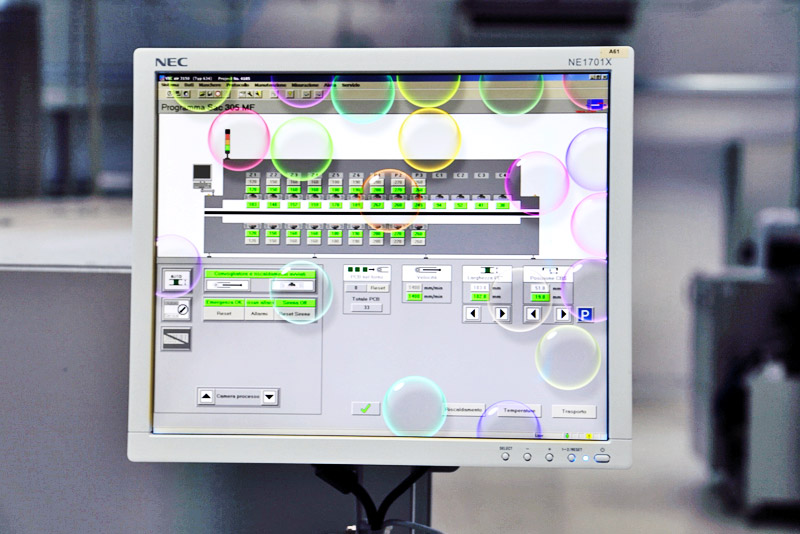
REFLOW CYCLE CONTROL
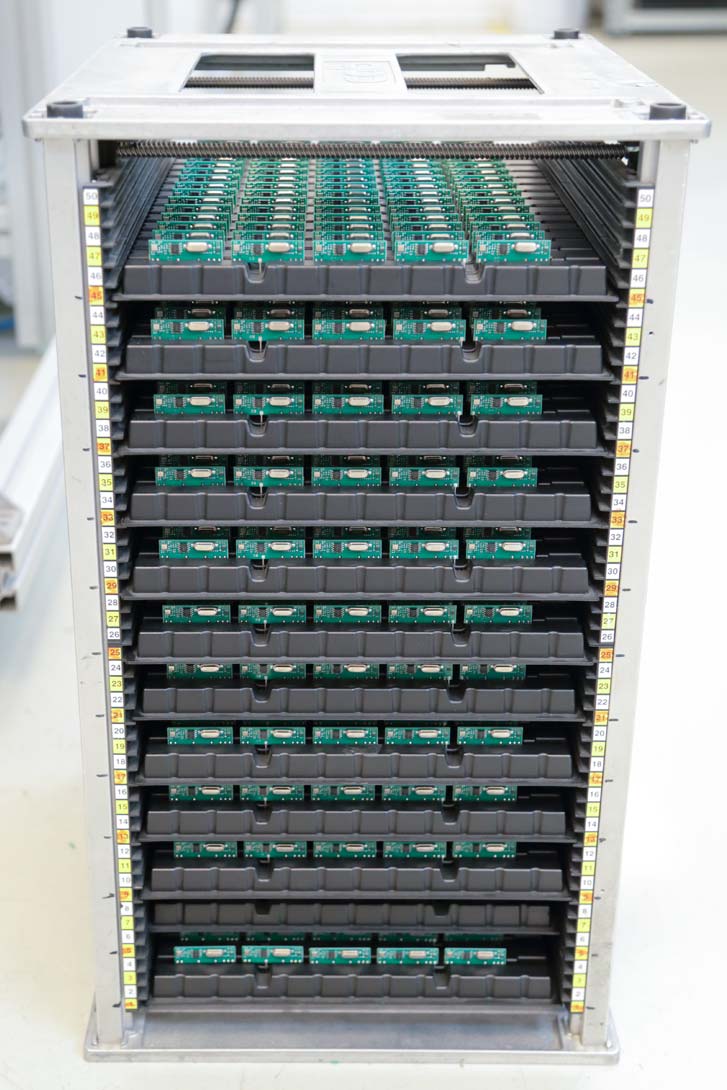
ADJUSTABLE ESD PCB RACKS
ESD PCB racks are adjustable on different sizes and are compatible with all machines involved in production (Screen Printer-Pick and Place-Ovens-AOI-Selective Solder).
The operator does not handle the single board until the operations are completed.
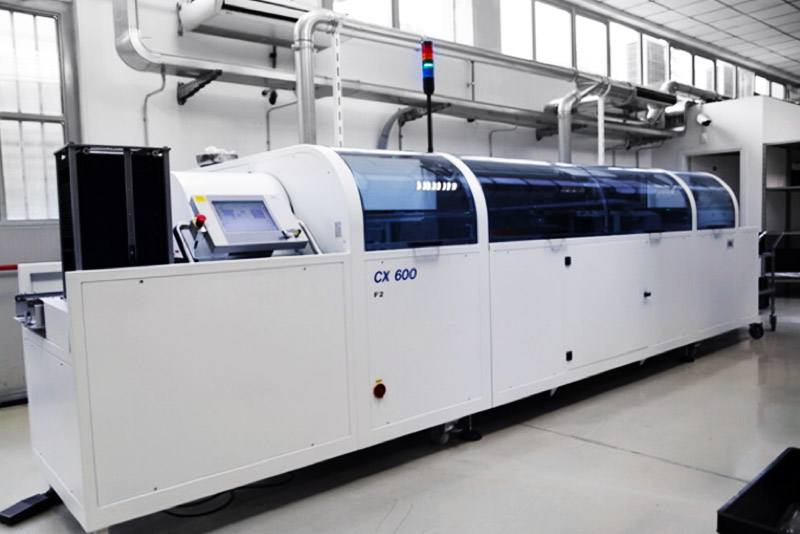
VAPOR PHASE OVEN
Vapor Phase soldering is extremely reliable and offers numerous advantages over conventional reflow systems.
There can be no uncontrolled temperatures on boards assembled with this technology; the boiling point of the inert fluid (Galden 230°C) will reach a well-defined temperature (specific to the type of fluid chosen).
The temperature difference between the various components on the board averages within 3 degrees Celsius, even between small (passive) components and D-PACKs.
Thanks to their efficient heat transfer (the condensation principle offers up to 10 times greater heat transfer than forced convection systems, whether air or nitrogen, and up to 50 times greater heat transfer than infrared systems), Vapor Phase systems offer significant energy savings and very low operating costs.
No oxygen: Vapor Phase soldering means an “oxygen-free” environment (with all the associated benefits). This technology does NOT use nitrogen to create an “inert atmosphere,” which undoubtedly also provides significant savings.
The lack of oxygen eliminates oxidation, allowing for better wettability of the joint and the alloy, resulting in better solder joints with greater mechanical strength.
At least 15/20°C lower temperature than traditional forced convection ovens: reduces thermal stress on all components on the board.
Minimization of board delamination: processing a board at a lower and more uniform temperature reduces mechanical deformations. Delamination problems due to humidity in the circuit are reduced. (For example, the humidity present in the PCB at 245°C can exert a force of up to 40 bar, while the same humidity “trying to escape from the PCB” at 230°C exerts approximately 28 bar.)
REFLOW IN A VACUUM OVEN
Some systems offer the ability to extract voids from SMD component solder joints while they are in the liquid phase.
The absence of voids in the joints improves their mechanical strength and therefore overall reliability. For power components with large contact surfaces, thermal reliability is also optimized, thus ensuring maximum dissipation of the heat produced by the component.
The design approaches of the machines differ, however, it is important that the total liquid time is not excessive, that the vacuum application is modulated over time to avoid problems due to the sudden release of voids (shorts, solder balling), and that the vacuum level is high enough to ensure good results on more demanding components such as D2PACKs and similar devices.
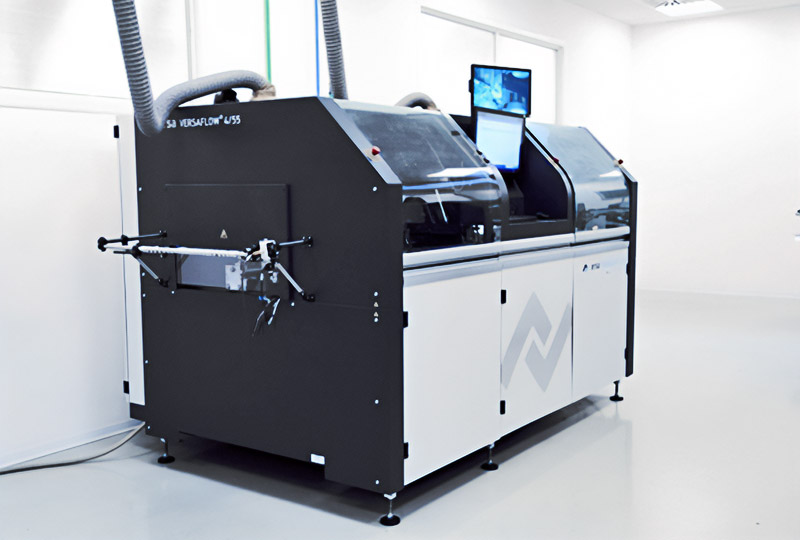
SELECTIVE SOLDERING
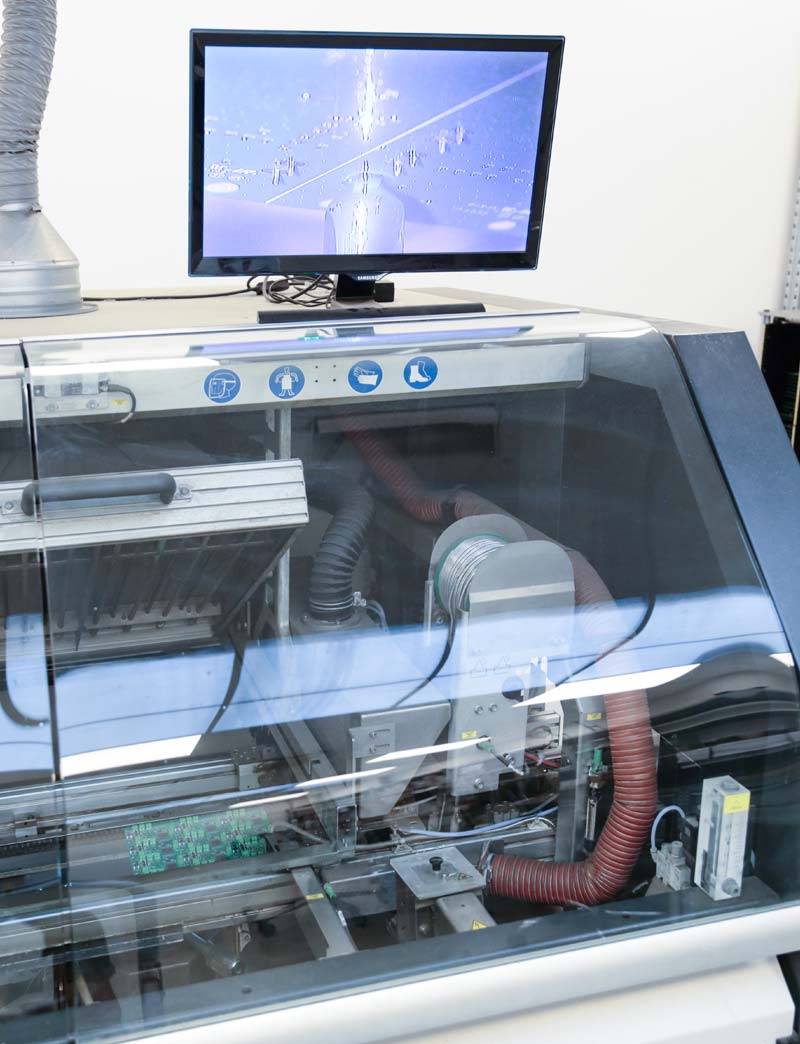
Selective soldering of PTH components avoids wave soldering because soldering occurs on a single pin using remelted solder through a nozzle.
The main advantages are reduced thermal stress on the board and cleaner soldering.
TEST EQUIPMENT
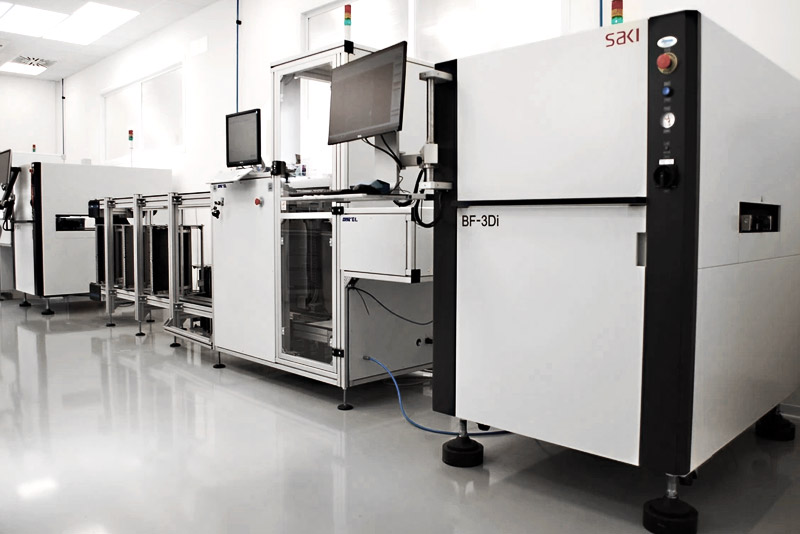
All boards produced are 100% inspected with SAKI 3D AOI machines.
A preliminary check is performed in-line, before reflow, with a Yamaha Ysi-V.
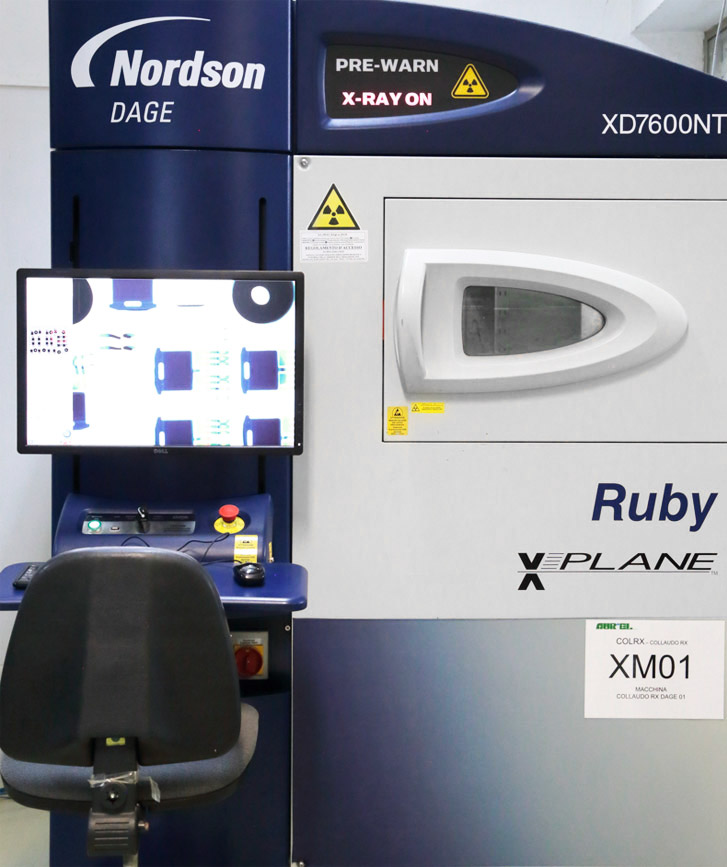
X-ray machine for process control
SERVICES
COMPONENT PROCUREMENT
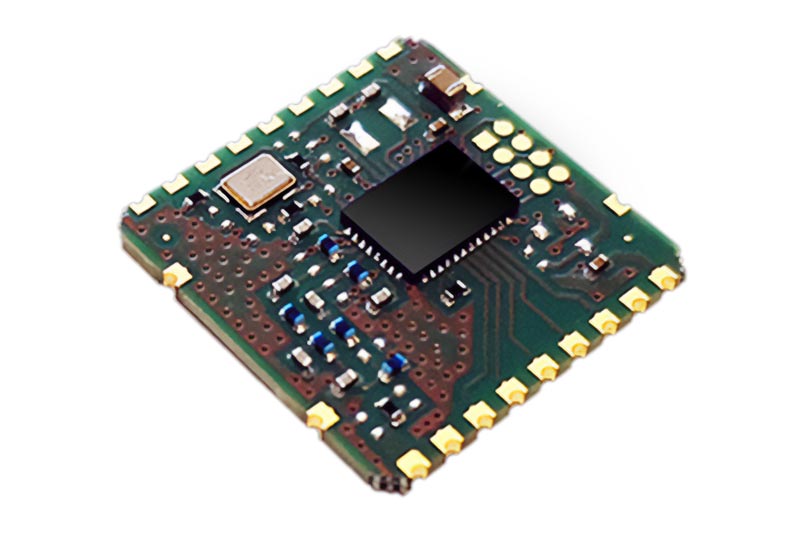
Procurement and storage of dedicated electronic components. AUREL has a dedicated supply chain team to efficiently planning customer BOM acquisition.
DESIGN & TEST
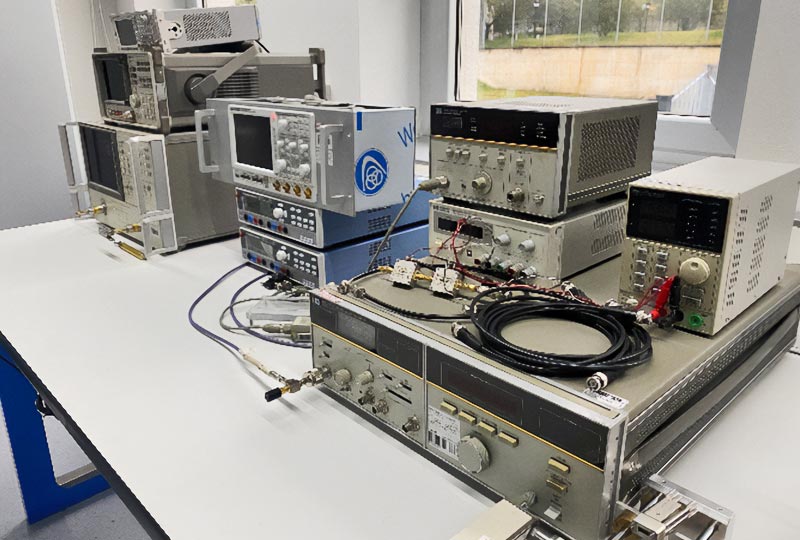
AUREL supports customers in the design phase with dedicated laboratories and experience in microelectronics, RF, and power electronics.
AUREL staff can assist customers with schematic design, layout mastering, and the creation of custom test benches.